Steps to buying a home in Naperville
Step 1: Work out what you can spend, step 2: Get pre-approved, not pre-qualified, step 3: Choose who represents you, step 4: Search with a shortlist, not a wishlist, step 5: Make an offer that can win, step 6: Inspection, appraisal and clear-to-close, and step 7: Closing day in Illinois.
Step 1: Work out what you can spend
Establishing your budget begins with your monthly housing commitment rather than the headline purchase price. A typical monthly mortgage payment combines loan principal, interest charges, local property taxes, and homeowners insurance coverage. Some residential properties also require separate monthly or annual homeowner association fees. These individual expenses combine to form your total housing cost. You can use an affordability calculator to balance these variables against your current income.
Mortgage lenders review specific financial factors to establish your total borrowing capacity. They assess your steady gross income, credit history, existing monthly debts, and available down payment funds. Lenders compare your recurring monthly obligations against your earnings to calculate your debt-to-income ratio. This calculation determines the maximum loan amount an institution will issue to you. Reviewing these requirements ahead of time allows you to adjust your savings strategy if necessary.
In August 2026, the median sale price across Naperville was $512,000. Homes in the community sold at an average of 97.6 percent of their list price that month. The market recorded 58 closed transactions and 73 new listings during the same monthly timeframe. Entering that $512,000 benchmark into an affordability calculator gives you an immediate picture of typical monthly costs. Balancing that baseline against your personal finances ensures you explore homes that align with your long-term goals.
Step 2: Get pre-approved, not pre-qualified
A pre-qualification provides an informal estimate based on self-reported finances without independent lender verification. In contrast, a pre-approval requires an underwriter to check your credit report, verify your income, and review your liquid assets. This detailed review converts your projected borrowing capacity into a verified commitment from a mortgage lender.
During August 2026, homes in Naperville spent an average of 20 days on the market. Buyers completed 58 home purchases, while sellers introduced 73 new listings to the market. The median sold price reached $512,000, and properties closed at 97.6% of their original list price. With 227 active listings available, local sellers inspect financing terms carefully before accepting an offer. A formal pre-approval letter demonstrates your purchasing capacity and gives sellers confidence that your transaction will close on schedule.
To obtain your pre-approval letter, you must gather standard financial records for lender review. Prepare your federal tax returns, recent pay stubs, W-2 forms, and complete bank statements. Collecting these items before you begin your search helps prevent delays when you find a property. You can review the pre-approval guide for specific details on mortgage requirements and underwriting procedures.
Step 3: Choose who represents you
A buyer's agent works directly on your behalf throughout the process of purchasing a home. Since August 2024, you must sign a written buyer representation agreement with your agent before you tour any property. This agreement defines the working relationship between you and your real estate professional. It states the exact services the agent will deliver during your property search.
The written representation agreement also details the compensation your agent will receive. You negotiate this compensation directly with your agent, because fees are not set by any market rule. The contract ensures that both parties understand the financial terms, the expectations, and the required duties before any home visits occur. You review and sign these terms prior to viewing houses together.
Illinois also maintains strict legal regulations regarding representation when an agent represents multiple parties. The state permits disclosed dual agency only with the informed written consent of both the buyer and the seller. This agreement requires the completion of a specific statutory consent form. Without signed consent from both parties on that required form, an agent cannot represent both sides of the transaction.
Step 4: Search with a shortlist, not a wishlist
Naperville had 227 active listings in August 2026, with 73 new properties entering the market and 58 closed sales. Homes spent an average of 20 days on the market before going under contract. Buyers negotiated an average sale-to-list price ratio of 97.6%, and the median sold price stood at $512,000. The broader 12-month snapshot indicates a consistent median value of $512,000 across local housing. Because properties move within three weeks, approaching your search with a clear shortlist keeps you organized and decisive. Defining your non-negotiable property criteria early prevents you from losing pace when inventory turnover is swift.
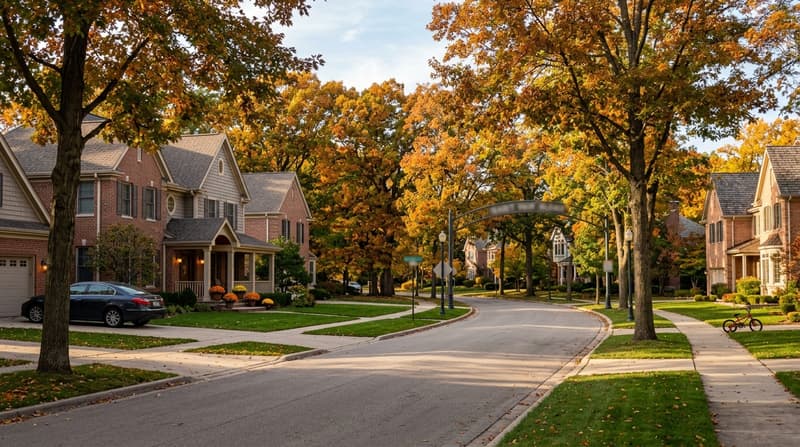
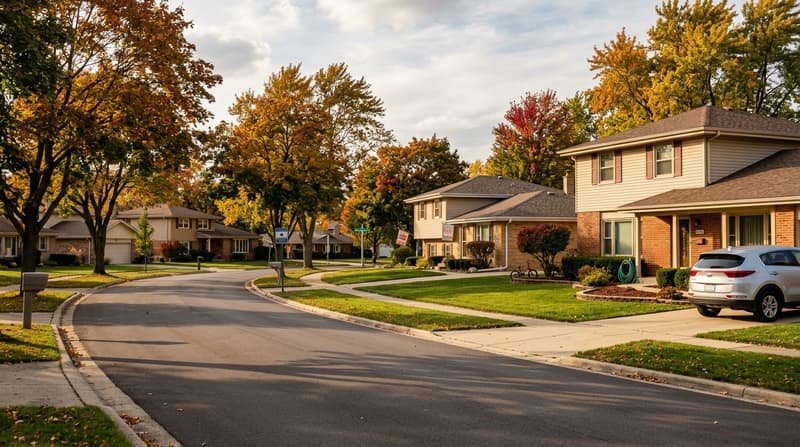
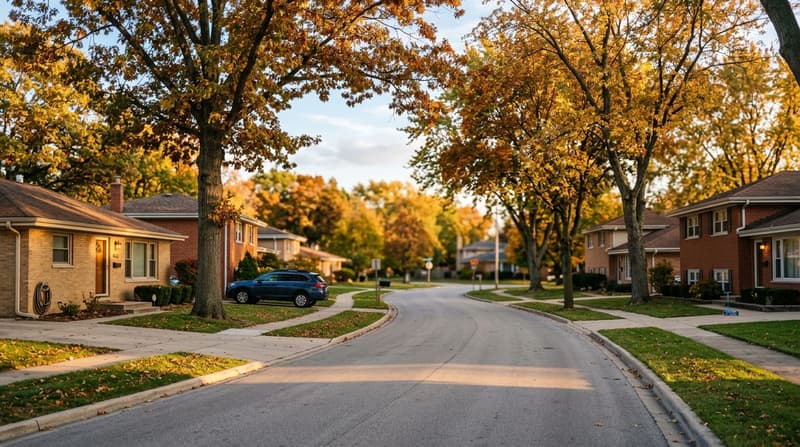
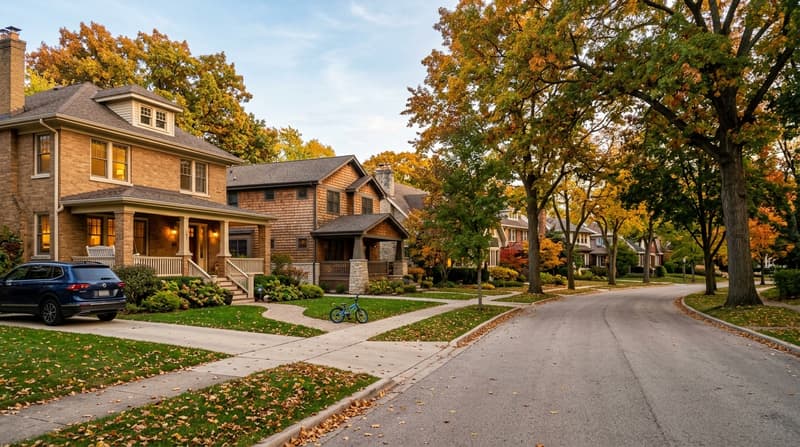
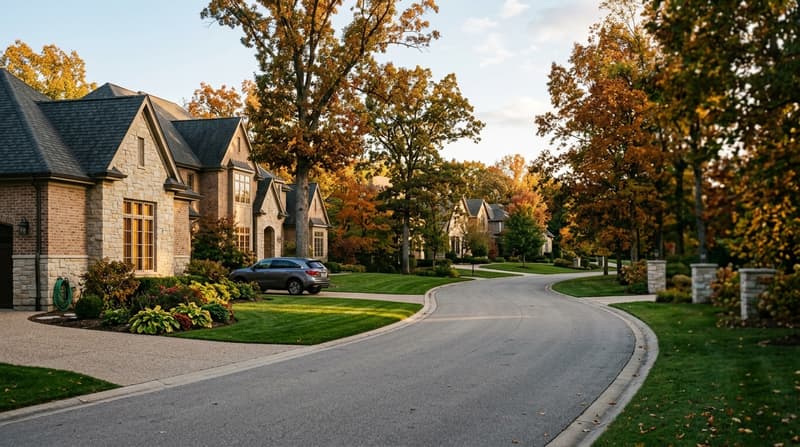
Across the city, Naperville contains 47,000 homes, with an owner-occupied rate of 80.0%. The community has an overall median build year of 1984, yet individual subdivisions feature different construction eras, floor plans, and architectural styles. Evaluate different neighborhoods strictly on concrete physical details, such as home age, interior layout, lot size, and commute routes. Comparing locations by structural features and travel corridors provides an objective assessment of whether a particular sector meets your functional requirements.
Organize your in-person property tours promptly, as an average marketing period of 20 days leaves little margin for hesitation. Touring homes directly allows you to evaluate mechanical systems, room proportions, window orientations, and street traffic conditions. In-person walk-throughs reveal practical realities that digital photography and floor diagrams cannot capture. You can review the area pages on this website to explore building patterns, home ages, and physical settings across different Naperville neighborhoods before booking appointments.
Step 5: Make an offer that can win
In August 2026, homes in Naperville sold for a median price of $512,000. Properties spent an average of 20 days on the market during that month. Sales prices averaged 97.6 percent of the original listing price across 58 closed transactions. The market recorded 73 new listings during August 2026, alongside 227 active homes. The broader community contains 47,000 total homes, with an owner-occupied rate of 80.0 percent and a median build year of 1984.
When you submit an offer, you will likely work with the Multi-Board Residential Real Estate Contract 8.0. This standard Chicago-area form contract defines the purchase price, contingencies, closing dates, and earnest money commitments. Earnest money terms are negotiated directly within the purchase contract. You customarily provide a deposit upon acceptance and pay the remaining balance within a few business days. These funds remain safely held in the listing brokerage's escrow account or in an attorney's escrow account. Deposit amounts commonly fall between 1.0 percent and 5.0 percent of the purchase price, but there is no fixed rule.
The contract also establishes an attorney review and inspection period. This period customarily spans five business days after acceptance by the seller. During this specific timeframe, either attorney may propose modifications to anything in the contract except the purchase price. Inspection contingencies allow you to request repairs or adjustments before moving toward the final closing date. You can consult the making-an-offer guide to understand how these contractual elements work together in your favor.
Step 6: Inspection, appraisal and clear-to-close
Before you sign a contract, the seller completes the Residential Real Property Disclosure Report under the Residential Real Property Disclosure Act, 765 ILCS 77/35. This statutory report discloses known material defects regarding flooding, foundation, roof, systems, and environmental items. Under the Illinois Radon Awareness Act, 420 ILCS 46/10, the seller also delivers the Disclosure of Information on Radon Hazards along with the Illinois Emergency Management Agency pamphlet. While Illinois does not require a radon test, buyers commonly schedule one during the inspection period. For housing built before 1978, federal rules mandate the Disclosure of Information on Lead-Based Paint and Lead-Based Paint Hazards. Under 24 CFR Part 35 and 40 CFR Part 745, buyers receive the EPA pamphlet and a ten-day inspection opportunity.
Your inspection window allows you to hire independent inspectors to evaluate the physical components of the property. You can review the inspections FAQ to learn how to navigate this evaluation step. Negotiations during the inspection period center on material defects, safety matters, and critical system failures rather than cosmetic wear. You may request direct repairs by qualified contractors, financial credits at closing, or a revised purchase price.
After inspection terms are settled, your mortgage lender orders an appraisal to verify property value. An appraisal gap occurs when the appraiser assesses the property below your agreed purchase price. You must address any gap through mutual price adjustments, additional cash down payment, or contract contingency terms. Your mortgage file then proceeds through underwriting conditions as the lender validates final financial documentation. Receiving clear-to-close status indicates that your mortgage is fully approved and funding is authorized. You then perform a final walkthrough to confirm that repairs are completed and the property remains in acceptable condition.
Step 7: Closing day in Illinois
Closings in the Chicago area take place at a title company office. Illinois operates as an attorney state by custom rather than statute. You and the seller each retain a real estate attorney to manage legal responsibilities. These attorneys review and modify the contract, clear title, and attend closing or sign in advance. The title company serves as both the escrow agent and the settlement agent for the transaction.
Established customs determine how the parties divide title insurance and administrative closing fees. By custom, the seller pays for the owner's title insurance policy and the seller-side closing fee. The seller also covers the title company search fee before the closing date. You pay for the lender's policy along with the buyer-side closing and escrow fees. Government transfer taxes are divided according to state, county, and local municipal rules. The seller pays the Illinois transfer tax of $0.50 for each $500 of value. In collar counties like DuPage and Will, the seller pays the county transfer tax of $0.25 per $500 of value. For property inside Naperville, you pay the municipal transfer tax of $3.00 per $1,000 of value.
Settlement concludes after the parties finish signing all required documents at the title office. All funds are disbursed by the title company on the day of closing.
Sources: Aurora Code of Ordinances, Real Estate Transfer Tax; Chicago Municipal Code 3-33-030; Chicago-area practice; Counties Code, 55 ILCS 5/5-1031; Cook County Code §74-100 et seq.; Evanston City Code 3-5, Real Estate Transfer Tax; Illinois Radon Awareness Act, 420 ILCS 46/10; Illinois State Bar Association; Chicago-area practice; Illinois statutes and federal regulation as listed; Multi-Board Residential Real Estate Contract 8.0, Attorney Review paragraph (13); Multi-Board Residential Real Estate Contract 8.0, Earnest Money paragraph; Chicago-area practice; Multi-Board Residential Real Estate Contract 8.0, Title paragraph; Chicago-area practice; Municipal ordinances as listed; NAR settlement practice changes effective 2024-08-17; Illinois REALTORS buyer representation forms; Naperville Municipal Code, Real Estate Transfer Tax; Oak Park Village Code 23A-1-2, Real Estate Transfer Tax; Real Estate License Act of 2000, 225 ILCS 454/15-45; Real Estate Transfer Tax Law, 35 ILCS 200/31-10.
Written from public sources and the closings recorded on this site; last revised September 21, 2026.



About the author
Blake Morgan
Real Estate Broker, John Greene · IL Broker #475212620
More about Blake →